


UDSM Hospital Wins National KAIZEN Award After Cutting Waiting Times and Transforming Patient Care
By Zamda George, CMU
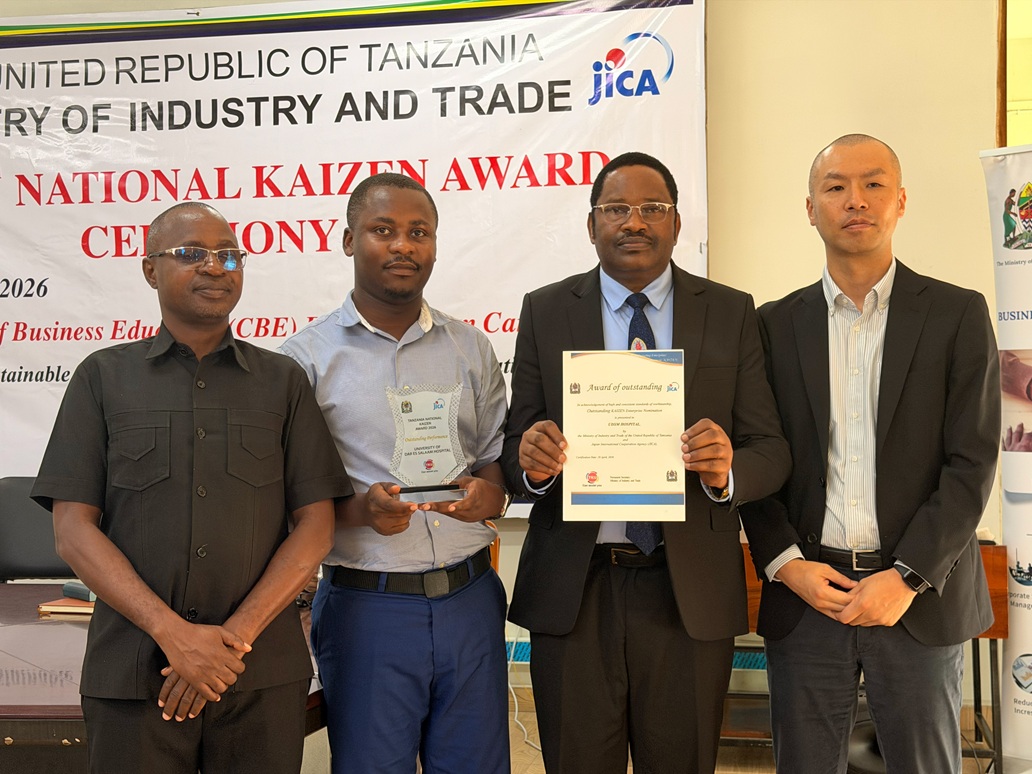
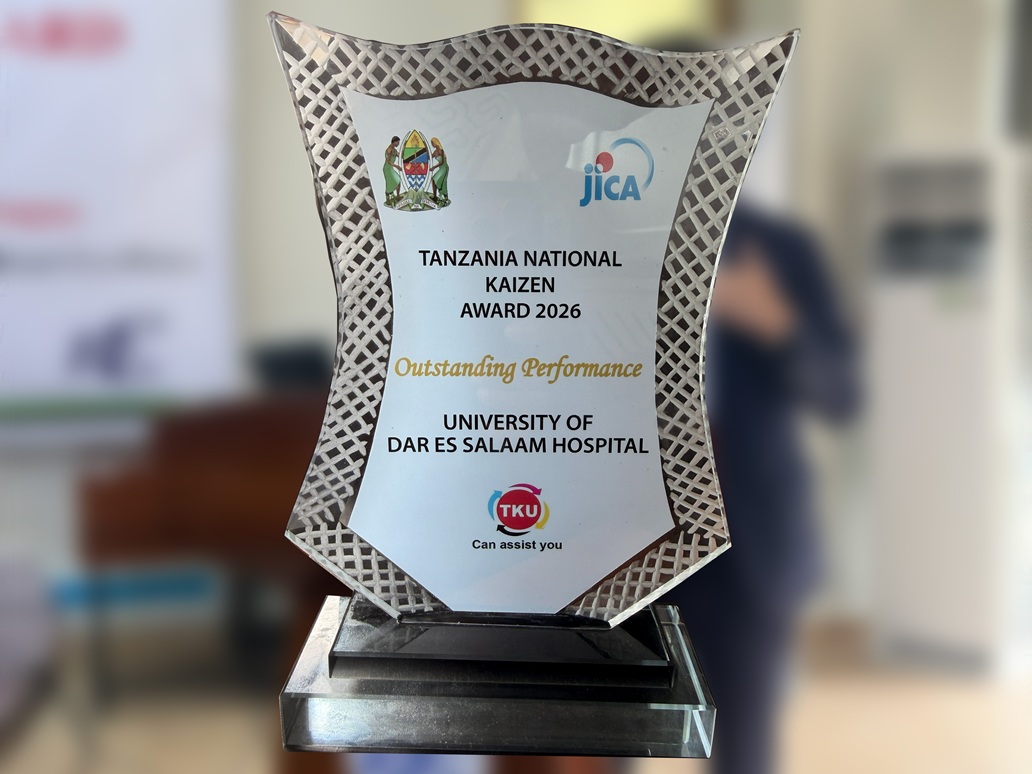
The University of Dar es Salaam Hospital has been recognised as one of Tanzania’s leading institutions in quality improvement after winning the Medium Scale Category at the 10th National KAIZEN Award Ceremony, a prestigious honour celebrating excellence in service delivery, efficiency, and continuous improvement.
The award, presented by the Ministry of Industry and Trade Tanzania in collaboration with the Japan International Cooperation Agency, marks a major milestone for the hospital and highlights the growing impact of KAIZEN principles in strengthening public institutions across Tanzania.
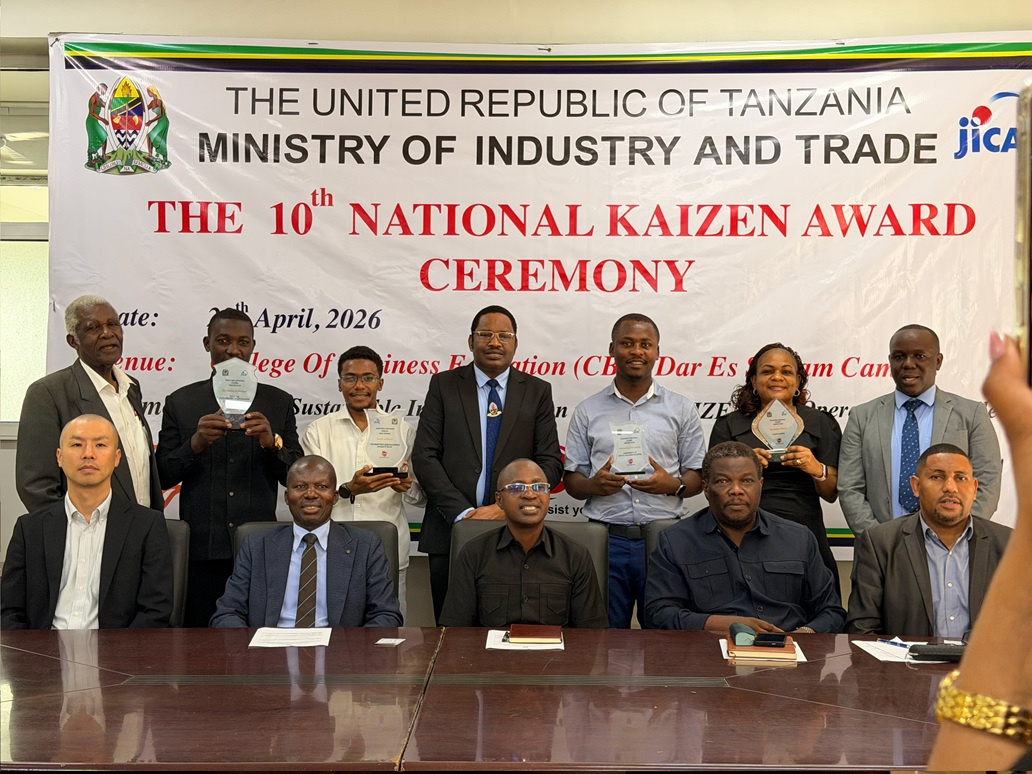
Held at the College of Business Education recently, the ceremony brought together senior government officials, industry leaders, development partners, and practitioners to celebrate a decade of the National KAIZEN Awards and 14 years of KAIZEN capacity-building initiatives in Tanzania.
The University of Dar es Salaam Hospital earned the award following a remarkable institutional turnaround driven by KAIZEN—Japan’s globally respected philosophy of continuous, incremental improvement.
Founded in 1961 as a dispensary and elevated to full hospital status in 2024, the facility today serves students, university staff, and the wider public through outpatient and inpatient care, diagnostics, pharmacy, maternity services, and other medical programmes.
Before the reforms, the hospital faced significant operational challenges, including long outpatient waiting times of up to four hours, workflow bottlenecks, and declining patient satisfaction.
Using the KAIZEN methodology through the PDCA cycle (Plan-Do-Check-Act) and Quality Control Circles, the hospital redesigned service systems, introduced a triage process, streamlined registration, reorganised internal workflows, and improved patient navigation through clearer signage and visual management tools.
Faster services, happier patients
The results were significant.Patient waiting times were reduced from between three and four hours to approximately one and a half hours, while patient satisfaction rose dramatically from below 55 percent to more than 88 percent.
Delays in laboratory and pharmacy services were also reduced to acceptable standards, while staff morale, teamwork, and service coordination improved substantially.
The hospital further strengthened digital operations through the Government of Tanzania’s Health Management Information System (GoT-HoMIS), helping modernise records management, patient flow, and overall efficiency.
Receiving the award on behalf of the hospital were Dr. Alfred Msasu, UDSM hospital Medical Officer In-Charge, and Epafra Prosper Kihiho, Assistant Nurse Officer who were recognised for spearheading the KAIZEN transformation process.
“The KAIZEN project improved health services by reducing patient complaints, cutting waiting time, and creating a more organised patient flow”, said Dr. Msasu after receiving the award.
Government applauds quality culture
Delivering welcoming remarks, Richard Pweleza, Head of the Tanzania KAIZEN Unit at the Ministry, said the continued success of KAIZEN demonstrates the importance of embedding a culture of efficiency, accountability, and innovation across sectors.
Representing the government, Dr. Yuda Lyagalo, Director of Industrial Development, commended participating institutions for translating KAIZEN principles into measurable results.
“These initiatives are directly aligned with Tanzania’s industrialisation and value-addition agenda,” he said. “We congratulate all participants, especially the winners, for demonstrating that continuous improvement can transform institutions.”
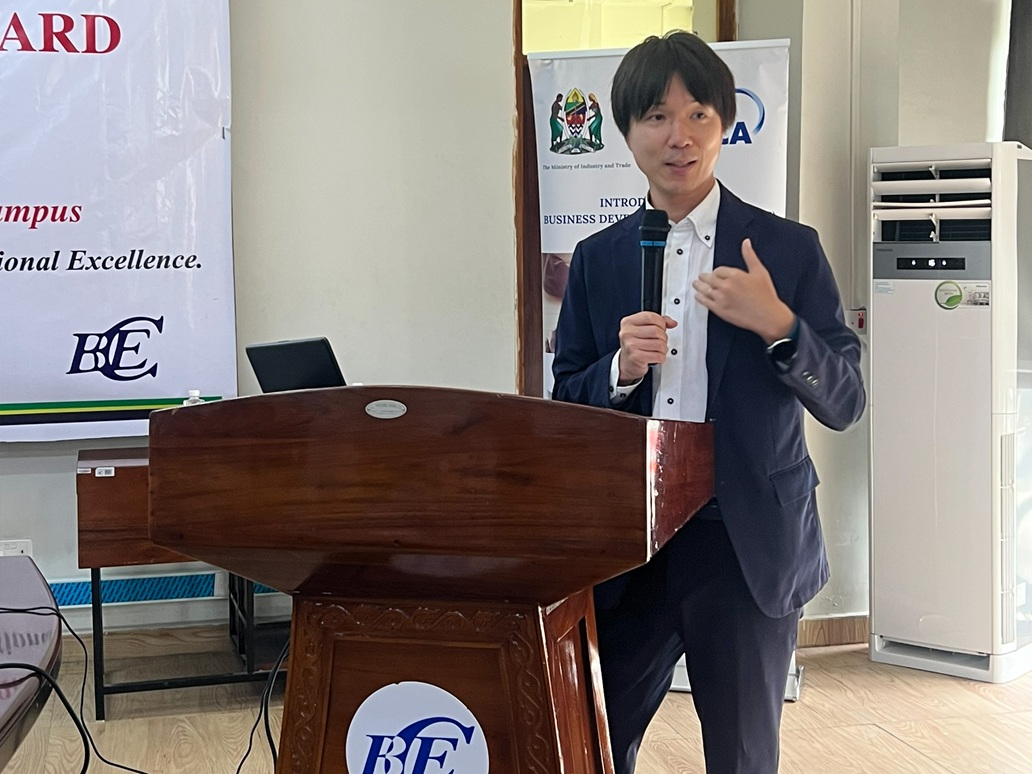
Offering an international perspective, Futihara Shunsuke said KAIZEN is more than a workplace management tool—it is a mindset that can improve productivity, discipline, and efficiency in both professional and personal life.
He noted that KAIZEN programmes in Tanzania continue to support the country’s priorities for economic growth, competitiveness, and stronger public service delivery.
Announcing the winners, Chief Judge Mr. Ruta Mutakyahwa encouraged organisations and individuals trained in KAIZEN to spread its principles more widely.
“KAIZEN is applicable everywhere—from factories and hospitals to schools, offices, and even daily life,” he said.
Other institutions recognised during the ceremony included YES Eco Group from Karagwe, Kagera, and Zanpackaging from Zanzibar in the Micro and Small Scale Category.
As part of their recognition, UDSM Hospital and fellow winners will now represent Tanzania at the regional KAIZEN competition in Mauritius, where they will compete against top-performing institutions from across Africa.
The victory positions the University of Dar es Salaam Hospital as a national model for healthcare improvement and responsive public service delivery.
Its success demonstrates that sustained, data-driven, and people-centred reforms can deliver powerful results—even through small but consistent changes.
For Tanzania’s wider public sector, the message from the award is clear: operational excellence is achievable, and continuous improvement can transform lives.